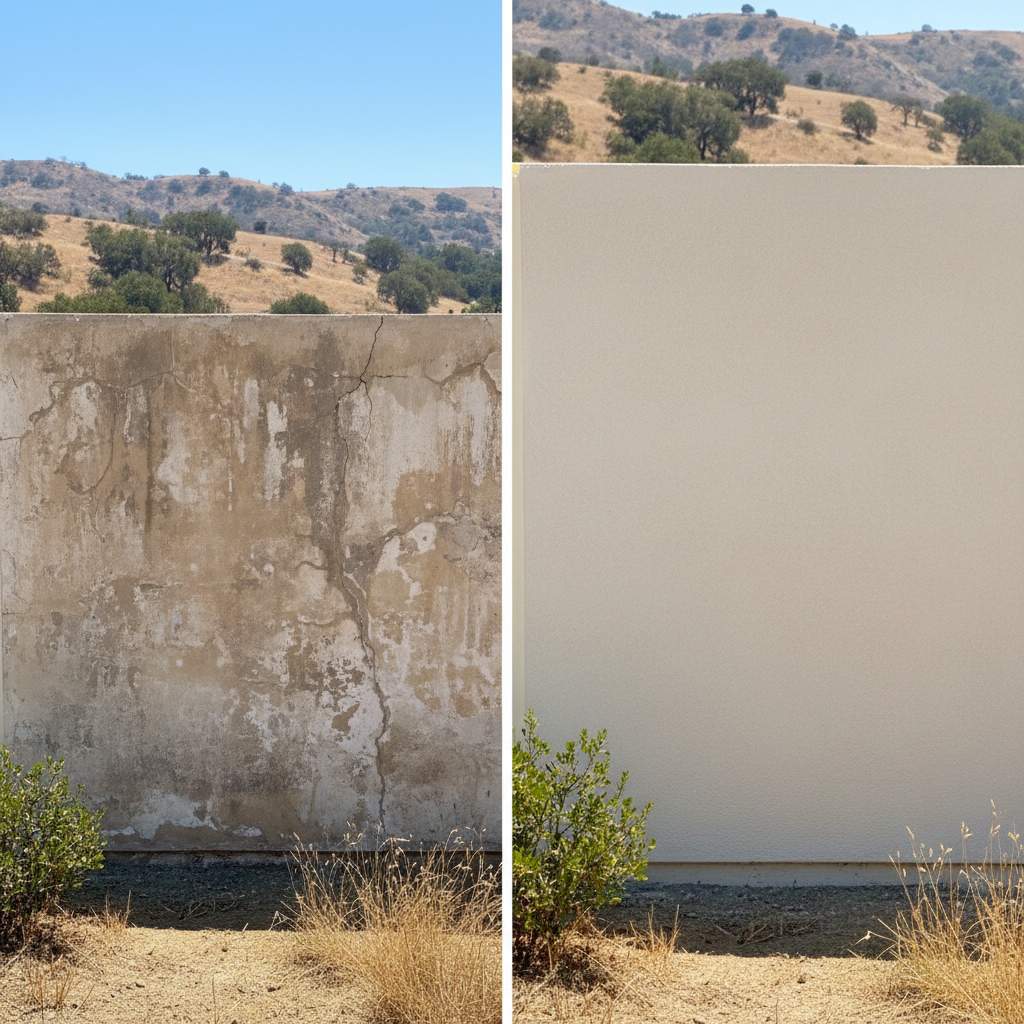
Alright, let's talk stucco paint. If your Chino Hills home's stucco is looking tired, faded, or just needs a fresh coat, you're probably wondering what kind of paint to use. It's not as simple as grabbing any old can off the shelf, especially with stucco. You've essentially got two main contenders: regular exterior acrylic paint and elastomeric paint. I see folks trying to decide between these all the time, so let's clear up the confusion.
Regular Acrylic Exterior Paint: The Standard Choice
This is what most people think of when they picture house paint. It's a good, solid option for many surfaces, and it definitely works on stucco. Acrylic paints are breathable, meaning they allow some moisture vapor to pass through. That's a good thing for stucco, which needs to breathe to prevent moisture from getting trapped underneath and causing problems like efflorescence or even delamination. Nobody wants that.
Cost: Generally, regular acrylic paint is less expensive per gallon than elastomeric. This can make the initial project cost lower, which is appealing to a lot of homeowners.
Durability & Maintenance: A good quality acrylic paint will last a decent amount of time, usually 7-10 years, sometimes more depending on the brand and how well the surface was prepped. You'll need to wash your stucco periodically, just like any other painted surface, to keep it looking clean. It's pretty easy to touch up if you get a ding or a scratch.
Appearance: You get a wide range of colors and sheens with acrylics. They look crisp and clean when first applied. The finish can be anything from flat to satin, giving you flexibility in how your home looks.
The Catch: Acrylics don't bridge cracks. If your stucco has hairline cracks, or develops them after painting, the paint won't stretch to cover them. You'll see those cracks right through the paint, which means you'll need to fill them before painting or deal with them showing up later. Also, their water resistance is good, but not exceptional. In a heavy rain, some moisture can still get through.
Elastomeric Paint: The Flexible Powerhouse
Now, elastomeric paint is a different beast altogether. Think of it as a super-thick, super-stretchy coating. It's specifically designed for masonry surfaces like stucco and concrete, and it's built to handle some serious abuse.
Cost: This is where elastomeric usually hits harder. It's more expensive per gallon, sometimes significantly so. The application can also be a bit more involved because it's thicker, which might add to labor costs if you're hiring someone.
Durability & Maintenance: This stuff is incredibly durable. It forms a thick, protective membrane over your stucco. It's designed to last 15-20 years, sometimes even longer. Its biggest selling point is its ability to bridge hairline cracks – up to 1/16th or even 1/8th of an inch, depending on the product. That means if your stucco develops new small cracks, the paint stretches with it, keeping your wall sealed and looking good. It's also highly resistant to water penetration, making it excellent for weather protection. Cleaning is easy; it's practically a waterproof barrier.
Appearance: Elastomeric paints tend to have a thicker, more uniform look. They often have a slightly textured, matte finish, which can be great for hiding minor imperfections in the stucco. Color options are still plentiful, but perhaps not as vast as standard acrylics in every single sheen.
The Catch: Because it's so thick and forms a membrane, it's less breathable than acrylic paint. While modern elastomerics are designed to allow *some* moisture vapor out, they aren't as forgiving if you have significant moisture issues *behind* the stucco. Also, if you ever want to change colors, it's a much bigger job to remove or even just paint over an elastomeric coating due to its thickness and texture.
My Recommendation for Chino Hills Homeowners
Here in Chino Hills, we've got a pretty dry climate, but we also get those hot, intense sun days, and sometimes we see temperature swings that can make stucco expand and contract. Plus, a lot of homes in areas like the Butterfield Ranch neighborhood have stucco that's been around for a while, and hairline cracks are just a fact of life.
For most homeowners, especially if your stucco is showing some minor cracking or you want maximum protection and longevity, I'm going to lean towards elastomeric paint. Yes, it's more expensive upfront, but the long-term benefits usually outweigh that initial cost. Its ability to bridge cracks and provide superior waterproofing means less maintenance and worry for you down the road. It's a fantastic investment in protecting your home's exterior.
Now, if your stucco is practically brand new, perfectly smooth, and you're just looking for a color change without any crack concerns, a high-quality acrylic paint can be a perfectly fine choice. But for the average stucco home that's seen a few seasons, elastomeric just offers a level of protection and durability that's hard to beat. It's why Charis Stucco Co. often recommends it for our clients looking for a lasting finish.
No matter which you choose, surface prep is key. You've got to clean the stucco thoroughly, repair any larger cracks or damage, and prime properly. Don't skimp on that step, or even the best paint won't perform like it should.